HALLOWEEN DEALS: Final days to get 15% OFF Dobinsons & more!


The Old Man Emu BP-51 is a user-adjustable, internal bypass shock absorber and coilover system engineered by ARB to deliver both ride comfort and off-road control in the same setup. Built around position-sensitive damping and on-car compression and rebound adjustment, it is Old Man Emu's highest-tier suspension — designed for drivers who want to define vehicle behavior rather than accept a fixed calibration.
Unlike sealed and pre-adjusted shock absorbers, the BP-51 allows a great deal of adjustment, converting the conventional suspension system into a system with customization possibilities. Its name comes directly from its design: ByPass with a 51mm bore. Each unit is application-specific and bolt-in, so no fitting modifications are required, while the adjustability lets the same shock adapt to daily driving, loaded overland travel, high-speed desert runs, and technical low-speed terrain.
What Is the OME BP-51 and How Does It Work?
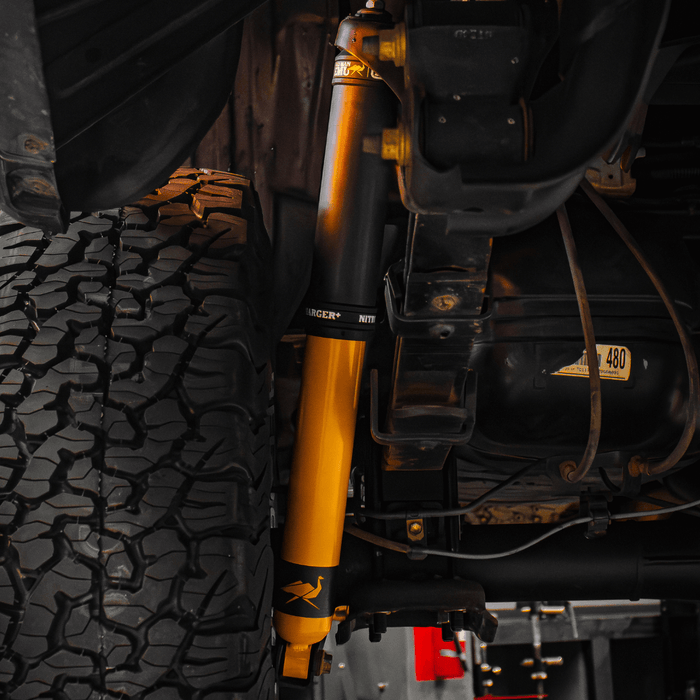
The OME BP-51 is an internal bypass coilover with a 51mm (2-inch) piston, built from 6061 anodized aluminum and designed in-house by ARB's Old Man Emu ride control engineers. It uses position-sensitive damping and externally adjustable compression and rebound, allowing one shock to behave softly at ride height and firmly at the extremes of travel.
Most shock absorbers generate damping only as fluid flows through the piston. The BP-51 adds an alternative path: bypass passages that route some fluid around the piston. Some fluid flows through the piston, and some bypasses around it. This is what lets a single shock deliver a compliant ride during normal driving and a more controlled ride over challenging terrain — without swapping components or re-valving.

Internal bypass, not external. Traditional bypass shocks — long used in off-road racing — run a series of tubes outside the shock body to route fluid around the piston. The BP-51 incorporates that same bypass principle internally, inside the shock body. According to ARB, this is the core innovation that makes the technology streetable and bolt-on rather than race-only.
Position-sensitive damping. Damping is not constant through the stroke. It increases as the piston approaches the end zones, so the shock stays comfortable around ride height and firms up near full compression and extension. This slows the piston before it tops out against the bump stop and lets larger bumps and corrugations be absorbed more easily.
6061 aluminum body. The shock body uses a 51mm bore in 6061-grade aluminum with a type III hard-anodized finish. ARB selects aluminum over steel specifically to dissipate heat more efficiently and resist corrosion, which directly supports performance consistency during sustained use.
Remote reservoir. A 6061 aluminum remote oil reservoir increases total oil volume, which lowers operating oil temperatures and reduces shock fade during extended off-road use. The reservoir handles cooling and oil capacity; the bypass handles the comfort-versus-control behavior. These are two separate systems working together.
Application-specific bolt-on design. Every BP-51 is engineered to bolt in to a specific vehicle with no fitting modifications. The tuning, spring selection, and geometry are matched to the platform, so the adjustability is added on top of a correct baseline rather than used to compensate for a generic fit.
How Position-Sensitive Damping Changes Real Driving Behavior
The defining difference of the BP-51 is that it eliminates the classic "stiff versus comfortable" trade-off. Because damping is tied to piston position, the shock can stay soft through the middle of its travel for daily comfort while automatically firming up at the extremes to control big impacts — so the vehicle is composed at speed without being harsh on the street.
- Daily & HighwayAround ride height, the bypass passages keep damping light, so normal driving stays compliant and the vehicle doesn't punish occupants over small road imperfections. The result is closer to a refined OEM feel than to a stiff aftermarket race setup.
- Big ImpactsAs the suspension cycles deep into compression or extension, damping ramps up. Large bumps, corrugations, and harsh hits are absorbed progressively, and the shock resists harsh top-outs against the bump stop. Control increases exactly where and when it's needed.
- High-Speed Off-RoadAt high desert speeds, the position-sensitive design plus stiffer compression and rebound settings keep the chassis composed and resist fade thanks to the remote reservoir's added oil volume. This is the scenario bypass shocks were originally built for.
- Technical TerrainFor rock crawling and slow technical sections, softer compression and rebound settings let the suspension move more freely and maintain traction. After a hard day on the trail, the same shocks can be dialed back toward a comfortable highway setting for the drive home.
How Do You Adjust Compression and Rebound on the BP-51?
 The BP-51 offers external, independent, on-car adjustment of both compression and rebound, plus spring preload — no disassembly, no special tools, and no trip to the shop. Each shock is labeled with ten settings for compression and ten for rebound. Increasing a setting stiffens the internal shim pack, restricting oil flow through the bypass and increasing damping.
This is the differentiator that matters most in practice. Many "adjustable" suspensions require tools, disassembly, or a workshop visit, which in real-world use turns them back into fixed systems. The BP-51 is designed to be adjusted where you are — you can pull over on the trail and change the behavior in minutes.
What compression and rebound actually control
Compression refers to the speed of the piston compressing under load — how the shock absorbs an impact. Rebound is the speed at which the shock extends under load — how it recovers control afterward. Because they're independent, you tune impact absorption and recovery separately rather than being locked into one combined calibration.
ARB's recommended starting points
ARB publishes recommended settings as starting points, organized by load. They're best paired with springs matched to your vehicle's constant weight. Below are ARB's published reference settings for the Tacoma as an example of how the system scales with added weight:
Front — Tacoma
| Setting | Stock Bumper | Bumper | Bumper & Winch |
|---|---|---|---|
| Compression | 0–4 | 2–6 | 4–8 |
| Rebound | 4–8 | 5–9 | 6–10 |
Rear — Tacoma
| Setting | 0–400 lbs | 400–800 lbs | 800 lbs+ |
|---|---|---|---|
| Compression | 0–4 | 2–6 | 4–8 |
| Rebound | 4–8 | 6–10 | 6–10 |
Source: ARB / Old Man Emu published BP-51 settings. Always confirm the current figures in the instructions provided with your specific application.
Example: dialing it in by terrain
High desert speeds call for stiffer compression and rebound; rock crawling calls for softer settings on both. As ARB notes, those same settings can then be readjusted so the on-highway drive home is comfortable. The point isn't a single "correct" setting — it's the ability to change behavior to match the day.
Who the BP-51 Is Best For
What our customers value most is the immediate change in handling feel and the clearly noticeable comfort response across different settings.
— David H., Sales Rep, Mudify
The BP-51 is best for drivers who genuinely want to tune their vehicle's behavior and will actually use that adjustability — not those simply looking for a bolt-on lift. It suits experienced owners who understand suspension trade-offs, run varied conditions, and want control over the outcome rather than an "average" setup that compromises everywhere.
- Multi-use buildsIdeal for vehicles that legitimately do several things — commute during the week, carry overland gear on weekends, and tackle technical terrain on trips — where one fixed calibration would compromise at least one of those uses.
- Loaded & variable-weight rigsWell suited to vehicles whose weight changes significantly: bumpers, winches, drawers, water, and trip gear. The independent adjustment and load-based settings let the suspension be re-dialed as the build or the load changes.
- High-performance off-roadA strong fit for higher-speed off-road and demanding terrain, where the internal bypass, remote reservoir cooling, and adjustability deliver control and fade resistance that fixed shocks can't match.
- Control, not simplicityBest for drivers who value adaptability and tuning capability and are willing to invest more to get it. It is deliberately not the simplest option — if you want a set-and-forget setup, a non-adjustable OME system like the Nitrocharger is the more sensible choice.
OME BP-51 vs MT64 vs Nitrocharger Plus: Which Old Man Emu Shock Should You Choose?

Choose the Nitrocharger Plus if you want a pre-tuned shock you install once and never touch. Choose the MT64 if your vehicle carries a consistent amount of extra weight and you only need to set ride height. Choose the BP-51 if you want to adjust compression and rebound yourself as terrain and load change.
All three are Old Man Emu shocks valved for a specific vehicle application, so the decision is not about build quality. It is about how much of the tuning you want to control — none, ride height only, or full damping control.
Quick picks by use case
-
Nitrocharger Plus
Daily driving and light overland, no setup wanted. Twin-tube, nitrogen-charged, fixed valving. Nothing to adjust after installation.
-
MT64
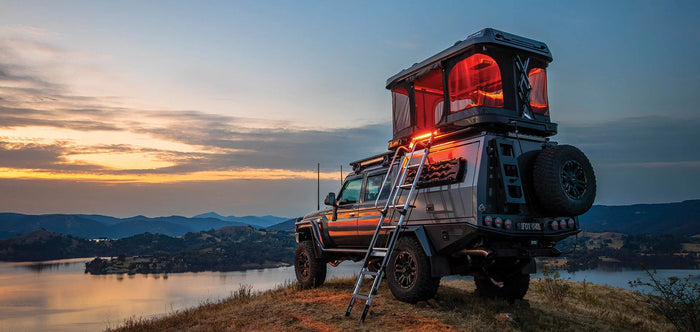
A steady load you carry most of the time — rooftop tent, drawers, rack, bumper. A 64 mm monotube body with a repositionable spring seat. You set ride height for that load configuration; damping stays fixed.
-
BP-51
Loads and terrain that change trip to trip. Internal bypass coilover with 10 compression settings and 10 rebound settings, adjustable on the vehicle in minutes.
Full comparison table
| Criteria | Nitrocharger Plus | MT64 | BP-51 |
|---|---|---|---|
| Shock design | Twin-tube, nitrogen charged | Monotube | Position-sensitive internal bypass shock |
| Body and bore | Application-specific steel body | 64 mm aluminum body | 51 mm 6061 hard-anodized aluminum body |
| Damping behavior | Fixed valving, tuned per vehicle | Fixed valving; larger bore improves heat dissipation | Position-sensitive: compliant near ride height, firmer toward full compression and extension |
| Owner-adjustable damping | No | No | Yes — compression and rebound, independently |
| Adjustment range | Not adjustable | Not adjustable | 10 compression settings, 10 rebound settings |
| Adjusted on the vehicle? | Spring seat typically requires assembly off the vehicle | Spring seat typically requires assembly off the vehicle | Preload requires removing the shocks. Compression and rebound via a proprietary tool |
| Ride height and preload | Determined by spring choice, with a limited-range adjustable spring seat for preload | Adjustable spring seat | Adjustable preload |
| Oil volume and cooling | Standard twin-tube volume | Larger monotube oil volume | Remote 6061 aluminum reservoir; highest oil volume in the range |
| Fade resistance, sustained use | Baseline | Improved | Highest |
| Serviceability | Sealed — replaced when worn | Serviceable and rebuildable components, though parts availability may vary | Built around rebuildable, serviceable components |
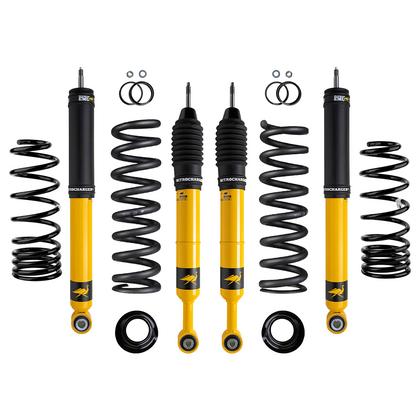
| Spring pairing | Sold as a matched kit | Sold as a matched kit | Preassembled strut, tuned spring |
| Setup effort after install | None | None | Ongoing — dialed in by terrain and load |
| Best for | Reliability and simplicity; daily plus overland | Overland builds, off-road use, and vehicles carrying steady added weight | Variable loads, mixed terrain, high-speed off-road |
| Not ideal for | Frequently changing loads; sustained high-speed desert running | Owners who want to control damping, not just height | Owners who will not use the adjustment; tightest budgets |
| Vehicle availability | Broadest coverage across the OME range | Medium to high coverage, focused on popular Toyota, Ford, Jeep, Nissan, and midsize/full-size pickups | More specialized coverage: Tacoma, Tundra, Hilux, Land Cruiser 70/100/200/300, Wrangler, Ranger, and similar |
| Relative investment | Baseline for the OME range | Mid-tier — approx. 1.8×–2.2× the cost of a Nitrocharger kit | Highest tier — approx. 3×–4× the cost of a Nitrocharger kit |
Specifications per ARB / Old Man Emu published product information. Confirm current figures and application coverage for your specific vehicle.
OME BP-51 vs Nitrocharger Plus
The Nitrocharger Plus is a sealed twin-tube shock with fixed valving; the BP-51 is an internal bypass coilover with a remote reservoir and 10 compression and 10 rebound settings you can change on the vehicle. The Nitrocharger Plus wins on simplicity, price, and application coverage. The BP-51 wins when the load or the terrain changes often enough that one fixed calibration always compromises something.
OME BP-51 vs MT64
Both are monotube-based and both allow some owner adjustment, but the adjustment is different in kind. The MT64's repositionable spring seat changes ride height and preload to account for added weight; its internal damping is fixed. The BP-51 changes the damping itself — compression and rebound, independently, on the vehicle. Choose the MT64 for a load you carry constantly, the BP-51 for a load that keeps changing.
OME MT64 vs Nitrocharger Plus
The Nitrocharger Plus is a twin-tube shock with fixed valving and adjustable height using a preload collar beneath the spring perch. The MT64 is a 64 mm monotube: the larger bore holds more oil and dissipates heat better under sustained off-road use, and the adjustable preload via a circlip and moving a spring seat lets you set ride height for a specific accessory load. Neither lets you change damping.
When the BP-51 is the wrong choice
The BP-51 is not a better shock in every scenario — it is a more involved one. It is the wrong choice if you want a set-and-forget system, if the vehicle runs the same load and the same roads year-round, or if you are not going to spend time learning how compression and rebound settings change the vehicle's behavior. In those cases a Nitrocharger Plus or MT64 kit delivers a better result per dollar, because an untuned BP-51 is an expensive shock running someone else's baseline.
BP-51 Durability and Construction
The BP-51 is engineered for longevity through its materials and serviceability: a 6061 anodized aluminum body and reservoir for heat dissipation and corrosion resistance, a hard-chromed ground piston shaft for strength, oversized rubber bushings for long life, and a replaceable HDPE shaft guard that protects against stone and debris impact. ARB states the design undergoes extensive dyno, real-world, and destructive testing.

A key practical advantage over sealed shocks is that the BP-51 is built around rebuildable, serviceable components. Where a sealed shock is replaced once worn, the BP-51 architecture is designed to be maintained — which matters for a premium, long-term suspension investment.
The key advantage is the ability to adjust settings without removing the shocks, allowing the system to adapt as your build and vehicle use evolve, rather than keeping you locked into a single setup.
— David H., Sales Rep, Mudify
Frequently Asked Questions About the OME BP-51
What does "BP-51" stand for?
BP-51 stands for ByPass with a 51mm bore. The name reflects its two defining features: an internal bypass damping design and a 51mm (2-inch) piston housed in a 6061 aluminum shock body.
Can you adjust the BP-51 without removing it from the vehicle?
Yes. Compression, rebound, and spring preload are all adjustable externally, on the car, with no disassembly or special tools. Each shock has ten compression settings and ten rebound settings, and they can be changed in minutes — even on the trail.
What is the difference between compression and rebound on the BP-51?
Compression controls how fast the piston compresses under load — how the shock absorbs an impact. Rebound controls how fast the shock extends afterward — how it recovers. The BP-51 adjusts each independently, so you can tune impact absorption separately from recovery.
Is the BP-51 an internal or external bypass shock?
The BP-51 uses an internal bypass. Traditional bypass shocks route fluid through tubes mounted outside the shock body; the BP-51 builds those bypass passages inside the body, which is what makes the technology bolt-on and street-friendly rather than race-only.
Does the BP-51 require specific springs?
Yes. The BP-51 is an application-specific system, and ARB's recommended damping settings are designed to be paired with springs matched to your vehicle's constant weight. Correct spring selection is what lets the damping adjustments work as intended.
Is the BP-51 worth it over a non-adjustable shock?
It depends on use. If you run varied conditions and loads and will actually tune the suspension, the BP-51's adjustability and bypass damping deliver control a fixed shock can't. If you want a simple, reliable, set-and-forget setup, a non-adjustable OME shock like the Nitrocharger is more appropriate and more cost-effective.
How do I know which settings to use?
ARB provides recommended starting points organized by load (for example, stock bumper vs. bumper-and-winch up front, or weight ranges in the rear), included in the instructions for your application. From those baselines, you adjust firmer for high-speed terrain and softer for low-speed technical driving, then re-dial for the drive home.