HALLOWEEN DEALS: Final days to get 15% OFF Dobinsons & more!


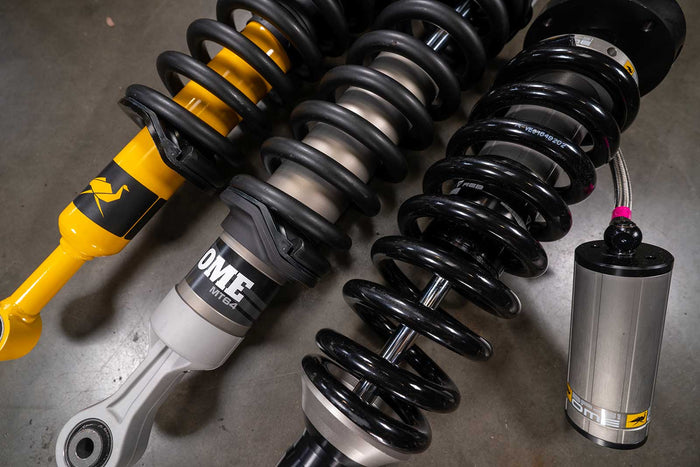
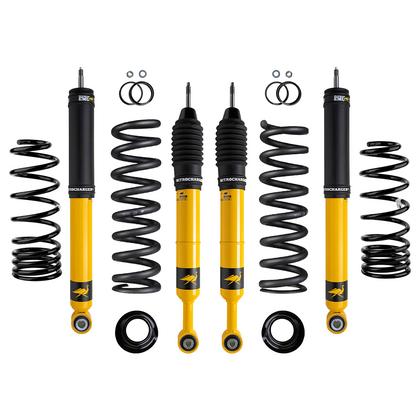
Old Man Emu (OME) Nitrocharger is a vehicle-specific twin-tube shock absorber system built by ARB to improve ride control, load handling, and stability on and off the road. Each application is tuned to a specific vehicle's weight and use case, making it a popular upgrade for Toyota, Ford, and Lexus owners seeking comfort, capability, and long-term reliability.
Engineered around specific vehicle weights, spring rates, and intended use cases, OME Nitrocharger suspension focuses on delivering predictable handling, reduced body movement, and consistent performance whether the vehicle is used for daily driving, overlanding, towing, or moderate off-road travel.

What Is the OME Nitrocharger and How Does It Work?
Old Man Emu Nitrocharger improves ride control through a combination of engineering features—including twin-tube construction, nitrogen gas pressurization, vehicle-specific valving, and reinforced internal components. Rather than relying on a single technology, each feature is designed to reduce fade, improve stability, and deliver more consistent suspension performance across daily driving, towing, and off-road conditions.
Twin-tube construction
The Nitrocharger uses a twin-tube layout with an inner working chamber and an outer reserve tube, helping manage oil movement and heat more efficiently than single-tube designs. ARB rates the reserve tube's heavy-gauge 1.6mm steel as 23% more resistant to stone damage than the common 1.3mm tubing used in generic shocks, keeping damping more stable during long drives or repeated off-road compression.
Nitrogen gas pressurization
Nitrocharger shocks are pressurized with high-pressure nitrogen to reduce oil aeration (foaming), one of the primary causes of shock fade during extended use. In Mudify's experience, this translates into more consistent suspension performance during long highway drives and extended off-road trips, where lower-quality shocks often begin to feel less controlled as temperatures rise.
Vehicle-specific valving
Unlike universal shocks, every Nitrocharger application is tuned for a specific vehicle, suspension geometry, and intended load. ARB's specifications list multi-disc compression valving with up to six valving discs per unit, giving engineers more room to match damping to the vehicle's spring selection and load. The result is a suspension that feels more composed and consistent across a wider range of driving conditions.
Heat management
Internal fluid routing and nitrogen gas pressurization help control heat buildup during continuous use. ARB describes its free-flowing internal design as reducing oil aeration and high operating temperatures, which helps the shock maintain consistent damping under demanding conditions. The result is more predictable performance as the shock works harder.
Materials and sealing
Heavy-gauge steel bodies, an 18mm induction-hardened chrome piston rod, and a Teflon-infused bronze slip ring are built to resist impact, contamination, and long-term wear. ARB also includes a polyamide dirt shield to guard against stone chips and off-road debris, and a triple-lip oil seal with a gas retention check valve designed to prevent contaminant damage while holding gas and oil pressure over time.
Over time, this is what keeps the ride from degrading mile after mile—less internal wear and contamination means the shock's handling behavior stays closer to how it performed when new, rather than getting softer or less predictable as it ages.

How Does the OME Nitrocharger Ride and Drive?
One of the most noticeable differences with OME Nitrocharger suspension is not a single performance metric, but how the entire vehicle behaves under real driving conditions. Instead of focusing on isolated effects like comfort or stiffness, the system changes how weight transfer, chassis movement, and stability are managed across different situations.
Braking and weight transfer
Under braking, OME Nitrocharger suspension helps control forward weight transfer, reducing excessive nose dive compared to stock suspension. The vehicle feels more level and composed when slowing down, particularly in setups with added front-end weight such as steel bumpers or winches.
Cornering and directional changes
In turns and quick directional changes, the suspension keeps chassis movement more controlled. Body roll is still present—especially in taller vehicles—but it is more progressive and predictable, which improves confidence on winding roads or uneven pavement.
Highway stability and road feedback
At highway speeds, OME Nitrocharger suspension contributes to a more planted and consistent driving feel. Instead of constantly reacting to small road imperfections, the vehicle maintains a steadier line, reducing the floating or wandering sensation common in softer OEM setups.
Loaded driving behavior
When the vehicle is carrying additional weight—whether from overland gear, towing, or permanent build components—the Nitrocharger system maintains more consistent behavior. The suspension is designed around vehicle-specific valving, so performance does not degrade as noticeably under load compared to generic aftermarket shocks.
Overall driving consistency
Across different speeds, terrains, and load conditions, the main difference is predictability. OME Nitrocharger suspension does not dramatically change the character of the vehicle; instead, it stabilizes it. The result is a more controlled and repeatable driving experience whether the truck is lightly equipped or fully built out.

Is the OME Nitrocharger Right for Your Build?
OME Nitrocharger suspension is designed for drivers who want improved control and consistency without moving into a highly specialized or overly adjustable setup. Rather than optimizing for a single condition, it's tuned to balance daily comfort with off-road capability—which is what makes it work well across a mix of real-world conditions rather than one dedicated purpose.
Daily-driven builds
Ideal for trucks and SUVs that spend most of their time on-road. The system improves stability, reduces excess body movement, and adds control without changing the fundamental character of the vehicle. ARB's own application guidelines note that Nitrocharger kits are selected based on the vehicle's carrying weight and intended use—not on how much lift height the owner wants—which is why a daily-driven truck with no accessories gets a genuinely different setup than a loaded one.
Overland setups
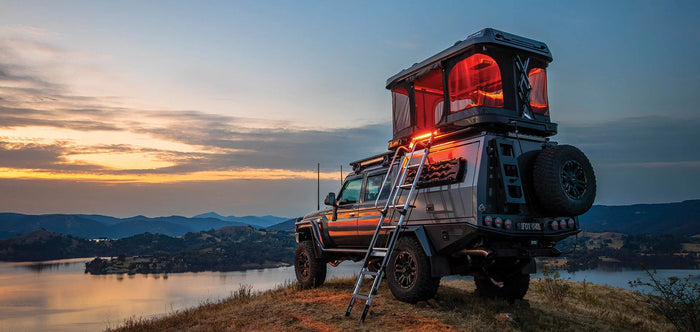
Well suited for vehicles carrying camping gear, roof racks, recovery equipment, or long-distance travel loads. The vehicle-specific tuning helps maintain balance and predictable behavior over extended trips. ARB draws a specific distinction here: accessories that stay on the vehicle permanently—bull bars, winches, roof racks—are treated as constant weight in the spring selection, while gear that comes and goes, like tents, tools, or a fridge, is treated as loaded weight. Getting that distinction right is part of what keeps an overland build from riding harsh when it's empty or wallowing when it's packed.

Moderate off-road use
Performs well on trails, dirt roads, and uneven terrain where control and durability matter more than extreme articulation or race-level performance. According to ARB, Nitrocharger valving is validated both in the field—using data logging equipment on real vehicles—and in the lab, using shock dynamometers to confirm durability across a range of conditions before a part number ships.
Towing and light added weight
Handles additional load from trailers or accessories while maintaining stability. The suspension is tuned to stay composed as weight increases, rather than becoming inconsistent or overly soft. ARB's vehicle application guide breaks added load into specific ranges—light load (up to 330 lbs of passengers and luggage), medium load (440–770 lbs), and constant load, which covers permanently mounted weight like a trailer tongue or built-in equipment—and spring selection is matched to whichever range applies.
Reliability-focused owners
Best for drivers who prioritize long-term durability and predictable behavior over adjustability or high-performance tuning complexity. The system is built around consistency rather than customization. ARB backs every Nitrocharger with a three-year nationwide manufacturer warranty, which reflects the same reliability-first approach the product is built around.
How Long Do OME Nitrocharger Shocks Last?
OME Nitrocharger shocks are widely regarded for their "set-and-forget" durability, with a real-world lifespan typically ranging from 30,000 to 100,000 miles depending on load, terrain, and usage intensity. Vehicles used primarily for highway or light daily driving tend to reach the higher end of this range, while setups that are frequently loaded or exposed to sustained off-road conditions generally see shorter service intervals.
In Mudify's experience selling OME Nitrocharger shocks across thousands of Toyota, Ford, and Lexus builds, these lifespan ranges reflect real-world observations, not manufacturer figures—actual service life varies with load, terrain, and driving style.
| Driving condition | Expected lifespan |
|---|---|
| Highway / daily driving | ~80,000–100,000 miles |
| Mixed use (daily + light off-road) | ~50,000–70,000 miles |
| Heavy off-road use | ~30,000–50,000 miles |
| Towing / constant added weight | ~40,000–60,000 miles |
These ranges are approximate and reflect Mudify's experience helping customers build and maintain OME suspension systems. They are intended as real-world guidance rather than manufacturer-published replacement intervals, and actual service life will vary depending on vehicle weight, terrain, maintenance, and driving style.

Why Nitrocharger Is Still Popular Today
OME Nitrocharger continues to be a reference point in the suspension market because it prioritizes consistency and real-world reliability over complexity or adjustability. Instead of chasing peak performance figures, it focuses on delivering predictable behavior across daily driving, towing, and off-road use.
- Proven reputation: long track record across Toyota and overland platforms.
- Balanced tuning: stable performance without sacrificing daily drivability.
- Simple setup: non-adjustable design reduces complexity and tuning decisions.
- Wide compatibility: vehicle-specific valving for popular trucks and SUVs.
- Real-world use case: performs consistently across mixed driving conditions.
- Reliability-first design: built for long service life with minimal maintenance requirements.
Frequently Asked Questions About OME Nitrocharger
Does OME Nitrocharger ride stiff?
Not necessarily. Nitrocharger shocks are tuned for specific vehicle weights and spring setups, so ride quality depends heavily on configuration. On stock vehicles they can feel firmer than OEM, but once the vehicle is properly loaded or equipped with compatible OME springs, the ride becomes more controlled rather than stiff.
What's the difference between the OME Nitrocharger Sport and Plus?
The differences are relatively minor, as both share the same core Nitrocharger design and durability standards. The Plus features a slightly larger shock body that holds more oil, resulting in a somewhat smoother and more controlled ride. On many Toyota applications, it also uses lighter front spring rates to address the firmer ride quality some drivers experienced with the original Nitrocharger Sport. For most daily-driven vehicles, however, the differences are subtle rather than dramatic.
Do I need other suspension components to run OME Nitrocharger?
In most cases, yes. Nitrocharger shocks are designed to work as part of a matched suspension system, typically paired with OME coil or leaf springs. While they can physically function on other setups, performance and ride quality are optimized when components are matched.
Are OME Nitrocharger shocks adjustable?
No. The Nitrocharger line is not externally adjustable. Damping is pre-tuned by OME for specific vehicle applications and load ranges, so there are no user-adjustable compression or rebound settings.
Do OME Nitrocharger shocks require OME springs?
They are strongly recommended. OME designs springs and shocks as a system, meaning valving and spring rates are matched. Using OME springs ensures proper ride height, load handling, and overall suspension balance.
How much lift does OME Nitrocharger provide?
Nitrocharger shocks themselves do not determine lift height. Lift comes from the springs used in the setup. Depending on the vehicle and spring choice, OME kits typically provide around 1.5 to 3 inches of lift, with shocks designed to operate correctly within that range.