
Translation missing: en.accessibility.skip_to_text
MEMORIAL DAY SALES: FREE Alignment with lift kits & more! ×

Mudify Blog

Why 1st-Gen Tacomas Aren't Compatible With Some OME Lift Kits: Explained

Posted on May 16, 2023

The 1st generation Toyota Tacomas, produced from 1995 to 2004, marked a significant milestone in the evolution of the popular mid-size pickup truck. These early Tacomas, also known as "pre-runner" models, were built with a focus on durability, versatility, and off-road prowess. With their distinct design and robust construction, 1st gen Tacomas have developed a loyal following among truck enthusiasts who appreciate their ruggedness and capability on and off the beaten path. However, when it comes to certain aftermarket modifications like the Old Man Emu lift kit, there are compatibility limitations that should be taken into consideration.

When it comes to enhancing the off-road capabilities and overall performance of a Toyota Tacoma, installing a lift kit is often a popular choice. However, not all lift kits are compatible with every Tacoma model. In this article, we'll explore why the X-Runner and 5-Lug 1st generation Toyota Tacomas are not compatible with the Old Man Emu lift kit and the reasons behind it.

All other 1st gen Tacoma's (others than the X-Runner and the 5-lug) can be lifted. Our site offers two loads option for the 1st generation Tacoma (1998-2004):

Medium Load (up to approx. 400 lbs)

Heavy-Duty Load (up to approx. 800 lbs)

For all other generations of Toyota Tacomas (2nd and 3rd generation), the Old Man Emu lift kit is a fantastic choice to elevate your off-road adventures.

You can try our site's configurator based on desired height and weight wether you have a 2nd generation (2005-2015) or a 3rd generation (2016-present).

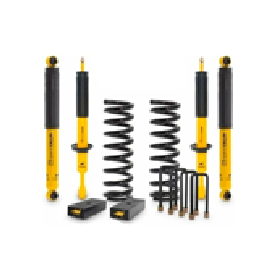
The Old Man Emu lift kit is a reliable option to take your truck's capabilities to the next level. Designed specifically for Tacomas equipped with coilover strut suspensions, the Old Man Emu lift kit offers a seamless fit and optimal performance. With carefully engineered components and spring rates, this lift kit enhances ground clearance, improves suspension articulation, and provides a more comfortable ride. Remember to consult with professionals or experts to ensure a proper installation and to make the most of your off-road adventures.

Now back to the reasons on why the X-Runner and 5-Lug 1st generation Toyota Tacomas are not compatible with the Old Man Emu lift kit:

  1. Understanding the Old Man Emu Lift Kit: The Old Man Emu lift kit is renowned for its quality, durability, and ability to enhance a vehicle's off-road capabilities. It is specifically designed to fit certain Toyota Tacoma models, and unfortunately, the 1st generation Tacomas are not included in this list.

  2. Difference in Suspension Design: The primary reason for the incompatibility between the 1st gen Tacoma and the Old Man Emu lift kit lies in the difference in suspension design. The 1st generation Tacomas (1995-2004) feature a torsion bar front suspension setup, while the 2nd and 3rd generation models (2005-present) use a coilover strut design.
    Why 1st Gen Tacomas Aren't Compatible with Old Man Emu Lift Kit: Explained

  3. Torsion Bar Suspension Challenges: Torsion bar suspension systems are unique and provide a different ride quality compared to coilover strut systems. They utilize a long metal rod, known as a torsion bar, which acts as a spring. The Old Man Emu lift kit, on the other hand, is specifically designed for coilover strut suspensions, allowing for a direct fit without modification.

  4. Compatibility Issues: Due to the fundamental differences between torsion bar and coilover strut suspensions, the Old Man Emu lift kit cannot be easily adapted to the 1st generation Tacomas. The kit is engineered to work harmoniously with the coilover strut suspension's geometry, spring rates, and overall design. Attempting to fit this lift kit onto a 1st gen Tacoma could lead to improper alignment, compromised handling, and potential safety risks.
    Why 1st Gen Tacomas Aren't Compatible with Old Man Emu Lift Kit: Explained

  5. Alternative Lift Kit Options: Although the Old Man Emu lift kit may not be compatible with 1st gen Tacomas, there are other lift kit options available for these vehicles. These kits are specifically designed to cater to the torsion bar suspension system and offer similar benefits in terms of increased ground clearance and improved off-road performance.

Conclusion: While the Old Man Emu lift kit is a popular choice among Toyota Tacoma owners, it is essential to understand that it is not compatible with 1st generation Tacomas. The difference in suspension design between torsion bar and coilover strut suspensions makes it impossible to install the Old Man Emu lift kit without significant modifications. If you own a 1st gen Tacoma and are looking to enhance its off-road capabilities, explore alternative lift kit options that are specifically designed for torsion bar suspension systems to ensure a proper fit and optimal performance. Always consult with a professional installer or seek advice from reputable off-road experts before making any modifications to your vehicle's suspension system.
Read More

Suspension Optimum for the Toyota 4Runner

Posted on September 10, 2021
Suspension Optimum for the Toyota 4Runner

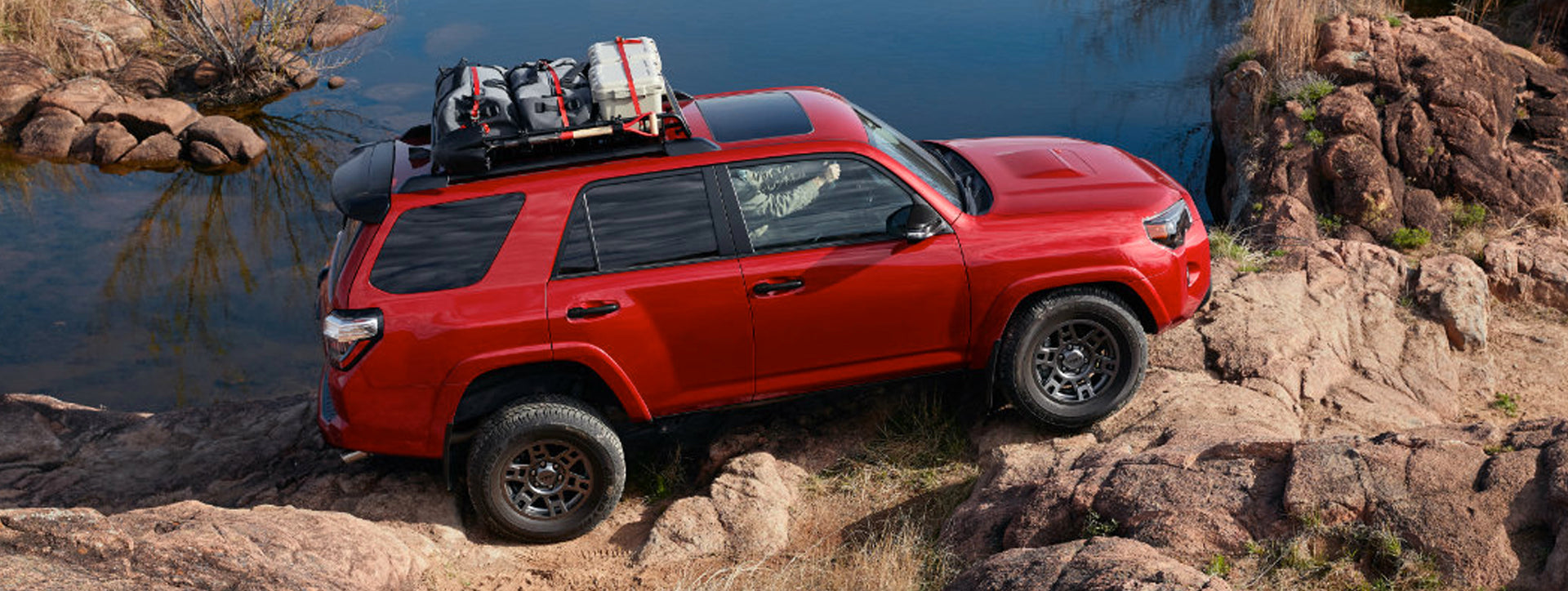
The 4Runner has been around since the 1980s. From its beginning, the Toyota 4Runner has been a popular choice for the masses. Yet, this dynamic, body-on-frame SUV was built to especially appeal to adventure seekers and weekend warriors who need a reliable partner both on and off the road. 

Currently in its 5th Gen, the 2010-2021 4Runner embodies this original purpose of being a true performer on the highway and the trail. And if you have a 5th Gen 4Runner and would like to elevate your offroad pursuits to even higher heights, a OME lift kit will meet your needs and exceed your expectations. Let's take a closer look at how to set up your OME lift kit for your 4Runner.

Why Is the Old Man Emu (OME) Suspension Optimum for the 4Runner?

If you're looking for a tested, tried, and proven way to elevate your 5th Gen 4Runner, the OME lift kit is your solution. This top-of-the-line suspension lift kit truly shines by delivering a superior ride while you're on the road and off. And unlike other lift kits, the OME suspension lift kit doesn't use spacers. Why does this matter? 

  • Spacer lift kits have limits. Spacer lift kits will only allow you to raise your 4Runner a few inches. Suspension lift kits allow you to raise your 4Runner higher than body kits will. 
  • Spacer lift kits can kill your ride. Because spacer lift kits create a higher center of gravity, it can negatively impact how your Toyota 4Runner performs. 
  • Height without clearance. Spacer lift kits are all for height and will not improve your ground clearance for your mud-slinging, rock-crushing adventures. 

With that being stated, let's take a closer look at what's involved with setting up your new OME 2 – 3 inch lift-kit. 

Step 1: Choose Your OME Front Coil Configuration

The first step in setting up your OME 2 – 3 inch lift kit is to choose your front coil. You have three different options:

  • 2" Lift: The 884 light load front coil offers a 2" lift.
  • 2.5” Lift: The 885 medium-load (70 lbs up to 100 lbs) front coil offers a 2.5” lift. 
  • 3.0” Lift: The 887 heavy-load (200 lbs and more) front coil delivers 2.5" up to 3" lift.

    How to choose the right front coil?

    When choosing the best front coils, it's important to know the total weight of your vehicle. Then you should know the front weight and rear weight. Combine this information with your desired height as a guiding light in your journey. The 884 light load front coils are perfect for those looking to raise the front end of their stock 4Runner. These coils can support minor front weight, anything more than that will cause sagging. But if you have already or are planning on adding the weight with a new bumper and/or winch, you should consider upgrading to a higher rated lift.

    Step 2: Choose Your OME Rear Coil Configuration

    Similar to your front coil, you have three options for rear coil configuration:

    • 2" Lift: The 889 medium load rear coil provides a 2" lift that is 30% stiffer than the stock
    • Up to 2.5" Lift: The 898 heavy load (400 lbs) rear coil offers 2" up to 2.5” lift
    • 3.0" Lift: The 899 HD load (up to 600 lbs) rear coil delivers up to 3" lift

      How to Choose the Right Rear Coil?

      Similar to the front, the rear spring option you choose should account for any accessories, such as tire carriers, bumpers, drawers, side steps, canopies, etc. If you're very concerned about the weight of the rear or front coil, consider the use of a roof rack, which distributes weight to both ends. 

      Step 3: Consider Your Upper Control Arms

      When it comes to your 4Runner's suspension, the upper control arms are important. They influence wheel alignment, suspension durability, and wheel travel. So anytime you're considering modifications to your suspension, a replacement upper arm can help enhance your overall performance. Here are the three options with the OME 4Runner suspension lift kit. 

      • Go with the stock upper control arms. This is the least advantageous option considering everything mentioned above. 
      • Choose the OME Forged Ball-in-Joint Upper Control Arms, or
      • Opt for the premium SPC Upper Control Arms

      Step 4: The Front Shocks

      Unless you're a skilled technician (and even if you are), this step is arguably the most difficult. In addition to special tools, you need specialized expertise to assemble the front shocks and coils of this lift kit. Fortunately, the team at Mudify can help. We offer a streamlined option designed to save you hours of time and transform your lift kit into a much-easier, simpler solution. When you opt for this option, you'll receive a ready-to-go, plug-and-play installation that takes a fraction of the time. 

      Ready to learn more? 

      Contact Mudify today to explore the new 2 - 3 inch OME lift kit for the Toyota 4Runner.

      Read More
      Translation missing: en.templates.cart.cart